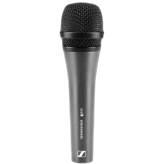
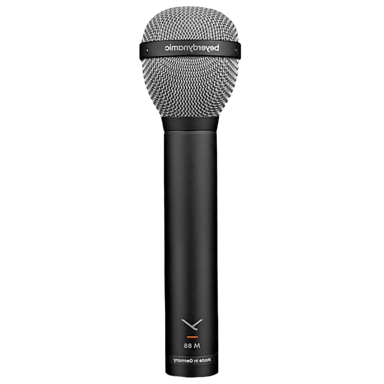
beyerdynamic M88 Reviews: See Why 0 Shoppers Rated It 0 Stars!
Thinking of buying the beyerdynamic M88? These beyerdynamic microphones earned a 0/5 from 0 users. Here’s what makes (or breaks) it.
 Supermod
  Moderator
 Recaptor
 Beyerdynamic M88 Microphone: A Timeless Dynamic Choice for Professionals
The beyerdynamic M88 stands as a staple in the world of professional microphones, renowned for its longevity and reliable performance since its release in 1976. Built primarily for studio, live, and podcast applications, this German-engineered dynamic microphone has carved its reputation based on its robust construction and clear, high-quality sound capture.
Designed with the experienced audio engineer and broadcast professional in mind, the M88 impresses with its straightforward wired setup and hypercardioid polar pattern, optimizing it for precise vocal isolation and versatile recording needs. This review explores the detailed specifications and their practical implications to assess whether the M88 still holds a competitive edge in modern audio environments.
Detailed Specs & Features
On paper, the M88 showcases classic dynamic microphone engineering, incorporating a large diaphragm capsule designed to deliver a wide frequency response spanning from 30 Hz to 20 kHz. This broad range allows it to capture both deep bass fundamentals and crisp high-end detail, making it suitable for various instruments and vocal tones.
The microphone's hypercardioid polar pattern ensures focused directional pickup, minimizing off-axis noise and reinforcing its utility in acoustically challenging environments. The passive power source design means it operates without phantom power, driving clean analog signals through a reliable XLR connection.
Its 1.97-inch capsule diameter yields a dynamic range of 138 dB and a maximum sound pressure level (SPL) of 148 dB, indicating it can handle loud sources without distortion. Sensitivity is measured at -56 dBV/Pa, which, while typical for dynamic mics, benefits from the basic internal preamp designed into this transformer-based model. The 10-foot cable supports practical stage and studio placement, complemented by its solid 0.9 lbs weight housed in a brass body with a steel grill finished in matte black. These build attributes reflect durability and corrosion resistance, important for lasting professional use.
User Experience & Performance (Based on Specs)
Design & Build
In daily use, the M88 presents itself as a straightforward and durable tool with no frills but substantial reliability. Its brass body and steel grill provide resilience against wear and mechanical damage, while the matte finish reduces visual distractions on camera or stage.
Notably, it lacks shock mount integration or foldable design features, pushing users to rely on external mounts or stands. The absence of onboard gain control or mute functions simplifies the user interface, making it friendly for those who prefer plug-and-play functionality without fuss. Its weight, combined with the 3/8" mounting thread size, offers stable positioning but minimal flexibility, so careful setup is advised for optimal sound capture.
Performance
What makes this mic notable from a performance perspective is the combination of the hypercardioid pattern with a fast transient response and 20 dB off-axis rejection. This equates to precise sound isolation, minimizing ambient noise; a key benefit in live broadcasts or untreated recording spaces.
The M88 also features a 20 dB low-cut filter, helping reduce low-frequency rumble or proximity effect without additional processing. Although it lacks advanced noise cancellation or adaptive gain controls, its built-in hum-compensating coil denotes a practical engineering choice that helps minimize electromagnetic interference, aiding clean audio capture in environments riddled with electronic noise.
Audio Quality
With a signal-to-noise ratio of 73 dB and total harmonic distortion (THD) at just 0.2%, the M88 is engineered for clarity and precision. The frequency response's breadth means it captures the full tonal spectrum without harsh coloration. Its cardioid directionality further emphasizes focused vocal and instrument pickup. Notably, the microphone's reliance on transformer-based circuitry contributes to a warm character preferred by many audio professionals, especially in studio recording situations where tonal fidelity is paramount.
Extra Features
Though it lacks modern extras like Bluetooth or USB compatibility and advanced DSP processing, the mode's simplicity, featuring feedback suppression and an on/off switch, focuses on core audio quality rather than gimmicks. This approach, combined with certifications such as professional broadcast certification and a robust 2-year warranty, confirms the M88's positioning as a reliable, no-nonsense workhorse.
Pros & Cons
Pros
- Exceptional durability with a brass body and a steel grill
- Wide frequency response and fast transient performance
- Effective feedback suppression and electromagnetic interference reduction
- Certified for professional broadcast use
Cons
- Lack of onboard controls beyond a basic on/off switch
- No shock mount or windscreen included
- No USB or wireless connectivity options
Price & Value for Money
Retailing at $549.99 at beyerdynamic, the M88's price point places it squarely in the professional microphone tier. Given its 2-year warranty and power source independence from phantom power, the investment aligns with its reputation for long-lasting quality and consistent studio-grade results. It's an excellent buy for users seeking a classic, proven dynamic microphone designed for heavy use in live and broadcast scenarios without many additional bells and whistles. Those desiring USB connectivity or advanced built-in DSP features may find the M88 lacking, but for fundamental acoustic excellence and reliability, the value is compelling.
Quick Take
In short, the Beyerdynamic M88 remains a benchmark for durability and sound fidelity in dynamic microphones. If we look at the numbers alone, high SPL capacity, a broad frequency range, and professional certifications, it's clear that the M88 was designed for dedicated users who prioritize core audio performance over modern gadgetry.
Closing Recommendation
The M88 appears to perform best for intermediate to professional audio engineers focusing on broadcast, studio, and live sound setups where sonic precision and robustness are paramount. While it may not cater to those seeking digital features or more flexible mounting options, its acoustic integrity and mechanical toughness help users achieve consistent, high-quality recordings in diversified environments.
Verdict
Rating: Based on the specifications and overall feature set, we believe the beyerdynamic M88 deserves 4.4 out of 5.
- Winner Feature => Exceptional durability combined with a broad frequency response and low distortion.
- Needs Improvement => Limited onboard controls and the absence of modern connectivity options reduce versatility.
Reviews 0
The good, the bad, and the brutally honest.Average Rating


More Microphones 1229
Unlock more awesome finds.